ADA RideShare App
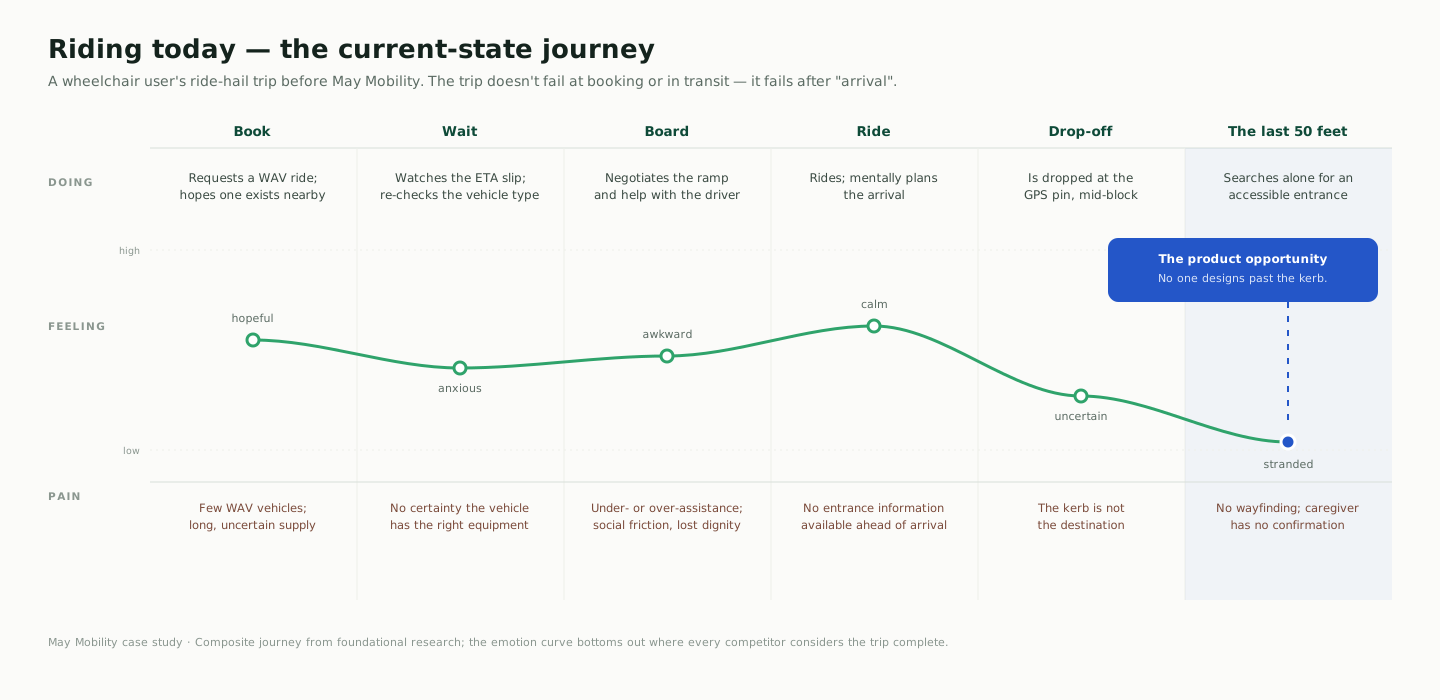
Project: A mobile app that closes the "last 50 feet" between an autonomous shuttle's drop-off and the accessible building entrance, for wheelchair riders.
Role: Lead product designer, delivery lead across product, engineering, and vehicle integration.
Method: Contextual inquiry, co-design workshops, task analysis.
Outcome: Unassisted loading and unloading rose from about 50% to over 90%.
Design for all. Seeing what others have missed.
May Mobility runs autonomous shuttle programs, and they run them like living experiments. A safety driver is on board today, more of the ride automates every cycle, and the goal is full autonomy. That transition is where accessibility gets hard. A wheelchair rider needs the ramp found, the lift run, a broken sidewalk crossed, and the right door reached. Today the safety driver does much of that by hand, guided by the driver app. As the system automates, the app has to carry more of it. When we started, only about half of wheelchair boardings happened unassisted. The problem was never the ride. It was the fifty feet on either end, and keeping the help intact as the human in the loop steps back.
Design goals
Serve every ability level. Not just wheelchair users. Mobility, vision, cognition, and stamina all vary, and a trip that's easy for one rider can be impossible for another, so the experience had to flex to the person.
Remember people. The app holds each rider's preferences and support needs, so they set them once and get an efficient, personalized ride every time, instead of re-explaining themselves at every pickup.
User research
Contextual inquiry. We shadowed wheelchair riders through real trips and documented what actually stopped them: subtle pavement cracks, steep inclines, blocked sidewalks, and a drop-off point that looked fine on a map and failed in person.
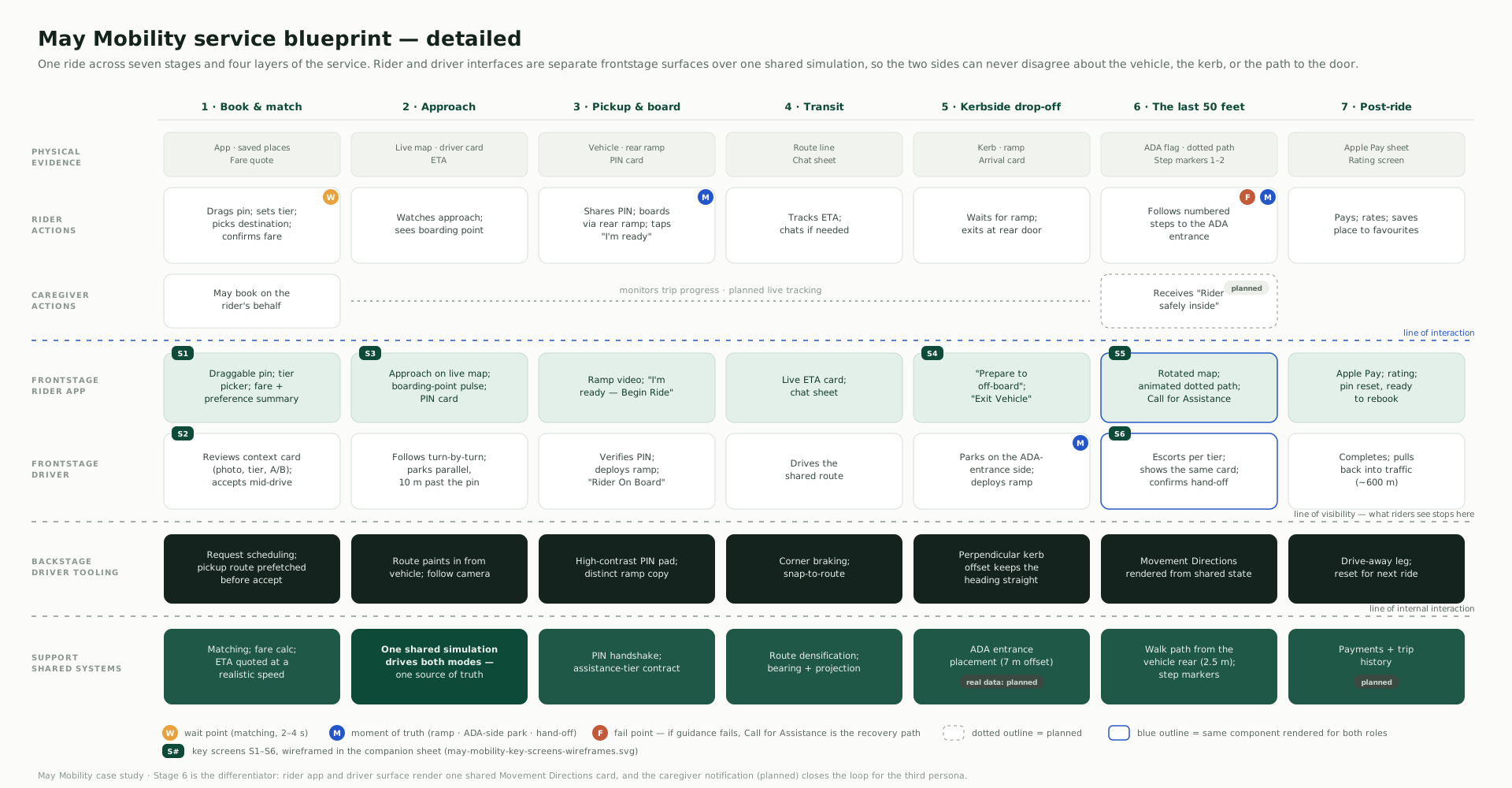
Co-design workshops. Working with riders, caregivers, and operators, we built a three-tier assistance model: Curb to Curb, Door to Door, and Hand to Hand. Riders set the level of help they actually want instead of getting a one-size-fits-all script.
Task analysis. We mapped every step of boarding to find the moment a rider needs each piece of information. That produced the Boarding Point Indicator: the right cue at the right instant, not a wall of instructions up front.


Key solutions
Wayfinding the last 50 feet. The app shows verified accessible entrances and draws an animated path from the drop-off to the correct door. A green wheelchair icon gives continuous, reassuring feedback that you're on the right track.
The Boarding Point System. A pulsing blue circle marks the exact spot, about four meters behind the shuttle, where the ramp will deploy. Orienting the vehicle and deploying the hatch and chair lift only takes seconds, so getting everyone to the right position up front is where those seconds are won.
Assistance tiers and preferences. Riders pre-set their support needs across three tiers, from Curb to Curb up to Hand to Hand, where the safety driver walks a rider in and hands them off to staff at a medical facility or anywhere ADA compliance is managed by people. They also set pickup and drop-off preferences, and caregivers can book a ride or ride along.
Feedback built in. The app captured rider feedback right in the experience and routed it into future improvements. Discovery didn't stop at launch, the product kept learning from real use.
The driver app. The safety driver follows it to run the wheelchair lift and assist riders, and it doubles as the operations layer: smoother day-to-day operations, field testing with real riders, and a feed into automating shuttle features. Rider experience and operations were designed together, not bolted on.
Impact
For riders. Unassisted loading and unloading climbed from about 50% to over 90%. More autonomy, less anxiety, and reassurance for the caregivers who worry from a distance. Rider satisfaction landed above 80%, driven by the preference settings and letting caregivers book.
For the business. Orienting and deploying the hatch and chair lift is measured in seconds, and precise boarding trims about ten of them off each one. Across a fleet, that scales into real cost savings. Operators are safer, operations run tighter, and an accessibility experience this considered is a genuine differentiator in autonomous transit. It shipped to production.
